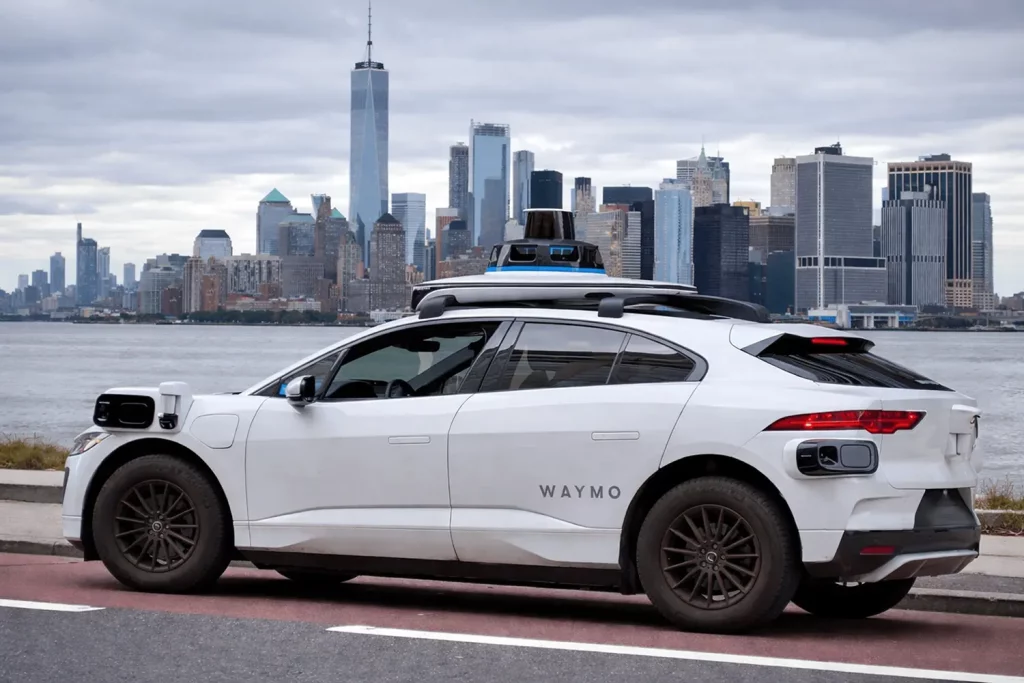
The popular image of an autonomous vehicle is one of total machine independence. No driver. No human input. The car simply knows what to do.
The operational reality is more nuanced, and more interesting. Behind every commercial robotaxi fleet operating on public roads today, there is a carefully designed human oversight layer that makes safe, legal and scalable deployment possible. It sits in a purpose-built operations centre, watching, monitoring and intervening when needed, connected to every vehicle in the fleet through cellular infrastructure that has to perform without interruption.
Understanding how that remote operations layer works, and the robotaxi remote operations connectivity it demands from network infrastructure, is essential context for anyone operating in the autonomous vehicle ecosystem.
Two distinct modes of remote oversight
Remote operations for robotaxi fleets is not a single capability. It encompasses two distinct modes of human involvement, each with different operational profiles and different connectivity requirements.
Remote monitoring and assistance
In this mode, a human operator maintains supervisory oversight of the fleet without directly controlling any individual vehicle. They watch live feeds from multiple vehicles simultaneously, track fleet-wide performance metrics, and stand ready to respond when a vehicle flags a situation it needs help with. When a robotaxi encounters an ambiguous scenario, such as an unusual road layout, an unexpected obstruction or an atypical interaction with another road user, it can request human input. The operator reviews the situation through the vehicle’s camera feeds and provides the contextual guidance the AI needs to proceed. The vehicle remains in autonomous control throughout. The human provides information, not commands.
Waymo describes this model as fleet response, a structured protocol through which its vehicles can seek assistance from remote agents without transferring driving authority to a human. The agent’s role is advisory. The autonomous system decides whether and how to act on what it is told.
Remote teleoperation
Here, a human operator assumes direct, real-time control of the vehicle’s movement (steering, acceleration and braking) from a remote location. This is a more interventionist capability, typically reserved for situations where the vehicle is stationary in a position that presents a hazard and needs to be moved short distances to clear the obstruction. At the low speeds involved (typically under 10 miles per hour), the safety risk profile is fundamentally different from high-speed remote driving, and the operational benefit is significant. First responders dealing with stalled autonomous vehicles blocking traffic lanes have made the case for this capability more compellingly than any engineering argument could.
Tesla confirmed in its response to a US Senate inquiry in 2026 that its remote operators are authorised to assume direct vehicle control at speeds up to 2 mph as a final escalation measure, and to remotely drive vehicles at up to 10 mph where the software permits. Waymo has similarly confirmed in its own filings that in rare circumstances, US-based personnel can prompt a stopped vehicle to move forward at low speed to exit a travel lane. These disclosures confirmed what practitioners in the industry already understood: remote teleoperation at low speeds is a legitimate and valuable operational tool, distinct from the higher-risk concept of full remote driving at normal road speeds.
Why the connectivity requirements differ
Remote assistance and remote teleoperation are operationally related but technically very different from a connectivity perspective. Understanding that difference matters for anyone specifying, procuring or delivering connectivity infrastructure for robotaxi operations.
Bandwidth and latency for remote assistance
Remote monitoring and assistance requires continuous, reliable uplink of video and telemetry data from the vehicle to the operations centre. The operator needs to see what the vehicle sees, in sufficient resolution and with sufficiently low delay to make a meaningful assessment of the situation. Bandwidth requirements for this mode sit in the range of 5 to 20 megabits per second per vehicle for the video uplink, with latency tolerance in the range of 100 to 200 milliseconds for the advisory interaction. This is demanding connectivity by most commercial standards, but it sits within the range that well-configured 4G LTE can support in low-congestion environments.
Latency as a safety-critical parameter in teleoperation
Remote teleoperation places dramatically more stringent demands on the connectivity infrastructure. When a human operator is directly controlling a vehicle’s movement, even at low speeds, the round-trip latency between the operator’s input and the vehicle’s response becomes a safety-critical parameter. Any perceptible delay between the operator’s steering or braking command and the vehicle’s execution of it degrades the quality of control and increases the risk of an incorrect response. Industry guidance and operational experience point to a maximum acceptable round-trip latency of 100 milliseconds for low-speed remote driving, with a target of under 40 milliseconds for production-grade teleoperation. The video stream supporting the operator’s view needs to arrive within 20 milliseconds to remain usable for real-time control.
These are not figures that standard best-effort cellular connectivity can guarantee. They require a fundamentally different approach to network quality, one where latency is contractually committed rather than statistically likely, and where the connection supporting the teleoperation session is isolated from the consumer traffic that shares the same physical network infrastructure.
5G capabilities behind production-grade remote operations
Two 5G Advanced capabilities are directly relevant to remote operations connectivity requirements, and understanding what they deliver, and why they matter specifically for this use case, is important context for evaluating connectivity options in this space.
URLLC
URLLC is the 5G mode designed for safety-critical applications requiring guaranteed end-to-end latency and extremely high reliability. Sub-10 millisecond latency with 99.9999% delivery reliability is the specification that makes real-time teleoperation viable at scale. This is not a feature available on 5G Non-Standalone networks. It requires 5G Standalone architecture with a core network designed to prioritise and guarantee this class of traffic.
Network slicing
Network slicing enables a mobile operator to create a dedicated virtual network within its physical infrastructure, reserved exclusively for a specific customer or use case. For robotaxi remote operations, a dedicated network slice means that teleoperation video and control traffic is isolated from consumer data, insulated from the congestion that occurs on shared network resources during peak urban hours, precisely when a dense robotaxi fleet is most active and most likely to require remote operator support. The slice carries its own guaranteed bandwidth allocation and its own QoS commitments, independent of what the rest of the network is doing.
MEC
MEC addresses the latency problem from a different angle. Rather than routing teleoperation data from the vehicle to a central cloud and back, MEC places compute infrastructure at or near the cell tower itself. The processing happens at the network edge, dramatically reducing the round-trip distance that data has to travel and enabling the sub-20 millisecond latency that production-grade teleoperation requires. Deutsche Telekom’s trials on the A9 autobahn in Germany demonstrated sub-20 millisecond vehicle-to-edge latency using exactly this architecture, with compute deployed at roadside base station sites rather than in distant data centres.
The regulatory dimension
Remote operations are not simply an operational preference for robotaxi companies. They are a regulatory requirement in most markets where commercial L4 autonomous vehicle services are permitted to operate, and the connectivity infrastructure supporting them is implicitly regulated as a consequence.
United States
Senator Markey’s 2026 investigation into remote assistance programmes at Waymo, Tesla, Zoox, Aurora, Motional, May Mobility and Nuro confirmed that every major AV operator relies on remote human oversight as part of its operational architecture. The inquiry has led to proposed legislation that would establish federal standards for remote operator location, vehicle-to-operator latency requirements, operator qualifications and mandatory reporting, effectively making connectivity performance a regulated parameter for the first time.
Germany
In Germany, the Autonomous Driving Act of 2021 and the associated permitting framework through the Federal Motor Transport Authority require applicants to demonstrate technical monitoring capability as a condition of operating permits.
China
In China, regulators have introduced pilot access schemes for intelligent connected vehicles that call for remote monitoring capability as part of the safety case AV companies must submit for commercial deployment approval.
What this means for connectivity providers
The remote operations layer of the robotaxi ecosystem represents one of the most clearly defined and most demanding connectivity use cases in any commercial deployment context today. The requirements are not ambiguous: latency thresholds, bandwidth floors, uptime commitments and QoS isolation are all specifiable in engineering terms, and the consequences of failing to meet them are directly traceable to safety and regulatory outcomes.
For connectivity providers, this specificity is both a challenge and an opportunity. Meeting the requirements demands genuine capability: automotive-grade hardware, 5G SA network access with URLLC and slicing support, MEC infrastructure in relevant urban operating zones, and contractual SLA commitments that go beyond best-effort service levels. But the operators who can meet those requirements with confidence are the ones that AV companies, fleet operators and mobility networks will build long-term infrastructure relationships with.
At Cubic3, our understanding of the connectivity demands that autonomous vehicle remote operations place on network infrastructure informs how we approach operator partnerships and customer engagements in this space. The technical requirements are known. The regulatory direction is clear. The connectivity infrastructure that can reliably support remote operations at scale is the piece of the robotaxi ecosystem that is still being built.
To discuss how Cubic3’s connectivity platform addresses the specific demands of autonomous vehicle remote operations, speak to our team.